
 Facebook
 X
X LinkedIn
 Forward
2025 Native Nations Nursing, Helpers, and Healers Summit
Auditorium seating is full for the Native Nations Nursing, Helpers, & Healers Summit. But you can still register to attend in-person or virtually! Options include:
- Attend the Summit in the UW-School of Nursing’s comfortable, 'state-of-the-art' Active Learning Classroom. The opening ceremony, morning speakers, and keynote address will be live-streamed in from the Auditorium. All in-person attendees will have full access to breakout sessions, refreshments and lunch, Indigenous artisans, exhibitors, and Dr. Robin Wall Kimmerer's book signing.
- Attend virtually! The Native Nations Nursing, Helpers, & Healers Summit will be live-streamed via Zoom. Details and links will be sent to you in advance of the Summit.
~ ~ ~ ~ ~
Join us on November 7, 2025, at the University of Wisconsin–Madison School of Nursing for the 10th Annual Native Nations Nursing, Helpers, and Healers Summit. This year’s theme, "Culture as Medicine," emphasizes integrating Indigenous wisdom with collaborative, evidence-based practices to promote health and well-being for Indigenous communities and planetary health.
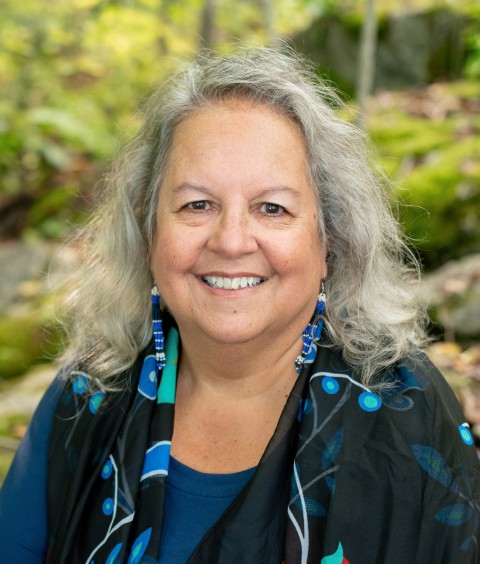
The summit features Dr. Robin Wall Kimmerer, renowned author of Braiding Sweetgrass and The Serviceberry, as the keynote speaker. Dr. Kimmerer will share insights on reciprocity, community, and gratitude inspired by the natural world.
This event welcomes tribal members, health professionals, students, and faculty, campus and community members, and advocates who are committed to holistic, relational approaches to health.
—Dr. Jeneile Luebke (Bad River Band of Lake Superior Chippewa Tribe), Assistant Professor, UW–Madison School of Nursing
|
Important Information
The 2025 Native Nations Nursing, Helpers, and Healers Summit will be held live in-person at the UW-Madison School of Nursing, and it will also be offered with online live-streaming to virtual attendees. No recordings will be available after the event. Here are important things to know:
- On-site attendance includes morning refreshments, lunch, Indigenous artisans, exhibitors, and a book signing by Dr. Robin Wall Kimmerer.
- Certain afternoon breakout sessions may only be available to in-person attendees.
- Auditorium seating is now full, but there is additional overflow seating in comfortable, 'state-of-the-art' Active Learning Classrooms at the School of Nursing, with live-streaming presentations from the Auditorium. Breakout sessions will be open to all in-person (and virtual) attendees). Virtual attendance is also an option.
- Book signing: More information about the book signing is available on the "Exhibition Hall" tab.
CLICK HERE TO SUPPORT THE SUMMIT |
Statement of Need and Purpose
A significant practice gap is the predominance of deficit-based approaches in healthcare and health professions education when working with Indigenous populations. These approaches focus on the "lack of" something and aim to identify failures and insufficiencies, often ignoring Indigenous strengths and perpetuating inequities. For example, healthcare providers may primarily focus on the high rates of certain diseases in Indigenous communities without adequately understanding or leveraging existing community strengths, resilience, or traditional healing practices. According to "Indigenous strengths based approaches to healthcare", health professionals are often taught and supported in practice via deficit-based approaches that perpetuate inequity for Indigenous peoples. This highlights a gap in the ability of healthcare teams to adopt and implement strengths-based perspectives that recognize and build upon the assets within Indigenous communities.
Another practice gap involves limitations in access to culturally appropriate healthcare and a lack of understanding. Furthermore, there is a gap in collaborative research efforts to understand barriers to care and disparities in treatment outcomes. This suggests that healthcare teams may not fully grasp the complexities of healthcare access for Indigenous peoples and the systemic issues that contribute to disparities.
Elements of Competence
This educational activity is designed to change learner competence and focuses on the following competencies:
- Accreditation Council for Graduate Medical Education (ACGME)/Nursing: Interpersonal and Communication Skills
- National Academy of Medicine (NAM)/Nursing: Provide patient/person-centered care and Population Health
- Interprofessional Education Collaborative Competencies: Values/ethics for interprofessional practice and Interprofessional Communication
- Social Impact and Belonging: Engage in Self-reflection, Address Differences in Health Outcomes, and Value Culturally Centered Care
Intended Audience
The audiences for the Summit include tribal members, health professionals and healing profession students and faculty representing nursing, medicine, physician assistants, social workers, psychologists, and dieticians, plus campus and community members.
Learning Objectives
After participating in the Summit, attendees should be able to:
- Describe the collaborative efforts necessary between Indigenous communities, tribal leaders, healthcare providers, community members, and researchers to deliver culturally safe programs that promote the health and wellbeing of Indigenous peoples and their communities.
- Explain the importance of integrating Indigenous ways of knowing and being into healthcare practices, emphasizing relationality and reciprocity in the healing process.
- Identify the skills and knowledge necessary for healers to promote the health and wellbeing of their patients, as well as the health of the earth, waterways, plants, and our animal relatives.
- Collaborate effectively with and within interprofessional teams to assess and address the healthcare needs of Indigenous communities, utilizing mutual respect and shared values to enhance communication and promote culturally safe, patient-centered care.
The University of Wisconsin–Madison Interprofessional Continuing Education Partnership (ICEP) gratefully acknowledges the financial support from the following companies/organizations:
University of Wisconsin–Madison, School of Nursing Signe Skott Cooper Continuing Education Fund
The Class of '71 Fund
Evjue Foundation
Forest County Potawatomi Foundation
National Institutes of Health – NARCH (award #U261IHS300417)
Medical College of Wisconsin
Nelson Institute for Environmental Studies
The Osher Center for Integrative Health
Native American Center for Health Professions (NACHP)
Native Nations UW Indigenous Student Wellbeing Subcommittee
Ho-Chunk Gaming Madison
Civil Society & Community Studies, School of Human Ecology, UW-Madison
Law School, UW-Madison
Department of Botany, UW-Madison
Department of Community and Environmental Sociology, UW-Madison
Additional Information

Course summary
- 4.75 AAPA Category 1 CME
- 4.75 AMA PRA Category 1 Credit™
- 4.75 ANCC Contact Hours
- 4.75 APA CE Credits
- 4.75 CDR CPEUs
- 4.75 University of Wisconsin–Madison Continuing Education Hours
- 4.75 Approved for AMA PRA Category 1 Credit™
Agenda
Friday, November 7, 2025
|
| |
7:00 - 8:00 AM |
| |
|
| |
8:30 - 9:00 AM | Welcome * | |
|
American Indian/Alaska Native (AI/AN) adults and youth have the highest rates of type 2 diabetes compared to all other racial/ethnic groups in the United States. While genetics play a role, the environment and lifestyle play much bigger roles. In order to reduce this health inequity among the AI/AN population, ways to prevent and/or better manage type 2 diabetes need to be utilized. This presentation will address ways to prevent and treat type 2 diabetes with “medicine” like traditional indigenous foods and walking. In addition, other prescription medicines for and public health approaches to type 2 diabetes will be addressed. After participating in this session, attendees should be able to:
| |
|
| |
|
After participating in this session, attendees should be able to:
| |
|
| |
1:15 - 2:30 PM |
| |
|
| |
2:45 - 3:45 PM | Breakout Sessions (choose one) | |
Discover Ojibwe traditional birthing practices, and how the culture and language is crucial in generational healing. Hear from an Ojibwe father on how the traditional birthing practices and culture allowed him to overcome opioid addiction. After participating in this session, attendees should be able to:
| ||
Dr. Thomas will discuss preliminary results of her most recent scoping review, Cultural Practices of Human Interconnectedness Within Nature. Dr. Thomas’ overall goal is to make meaningful contributions to Indigenous communities and create substantive nursing knowledge that improves health outcomes for Indigenous women. After participating in this session, attendees should be able to:
| ||
Dr. Vera will present on foundational concepts of the determinants of planetary health from an Indigenous perspective and her subsequent work in Aotearoa New Zealand studying Māori and Indigenous women's experiences of embodiment on Land as a path to healing and Indigenous (well)being. After participating in this session, attendees should be able to:
| ||
|
| |
4:00 - 4:25 PM |
After participating in this session, attendees will be able to:
| |
| Dean's Thank You & Farewell * Linda D. Scott, PhD, RN, NEA-BC, FADLN, FNAP, FAAN | |
* NO CREDIT PROVIDED
Program Changes
Situations occasionally occur that may necessitate topic or speaker changes. The University of Wisconsin-Madison ICEP reserves the right to alter or substitute a topic or speaker without prior notification.
Parking & Travel Information
- Parking is available near the UW School of Nursing in lots 76, 67, and 36. Check the availability of visitor parking when you arrive on campus. Parking space availability is updated in real-time.
- Download and print our Native Nations Summit - Cooper Hall parking map.
- Many Madison Metro Bus Routes serve our campus.
- Alternative transportation options: Union Cab, Madison Taxi, Uber, Lyft
- Check the availability of City of Madison parking options.
- Visit the campus construction updates on the Transportation Services website to find all information regarding current road construction on campus and its impacts on pedestrian, transportation, and vehicle traffic.
- Discover Custom Commute Planning.
Keynote Speaker
| Robin Wall Kimmerer, MS, PhD Robin tours widely and has been featured on NPR’s On Being with Krista Tippett and in 2015 addressed the general assembly of the United Nations on the topic of “Healing Our Relationship with Nature.” Kimmerer is a SUNY Distinguished Teaching Professor of Environmental Biology, and the founder and director of the Center for Native Peoples and the Environment, whose mission is to create programs which draw on the wisdom of both indigenous and scientific knowledge for our shared goals of sustainability. In 2022 she was named a MacArthur Fellow. As a writer and a scientist, her interests in restoration include not only restoration of ecological communities, but restoration of our relationships to land. She holds a BS in Botany from SUNY ESF, an MS and PhD in Botany from the University of Wisconsin and is the author of numerous scientific papers on plant ecology, bryophyte ecology, traditional knowledge and restoration ecology. As a writer and a scientist, her interests in restoration include not only restoration of ecological communities, but restoration of our relationships to land. She lives on an old farm in upstate New York, tending gardens both cultivated and wild. |
EMCEE
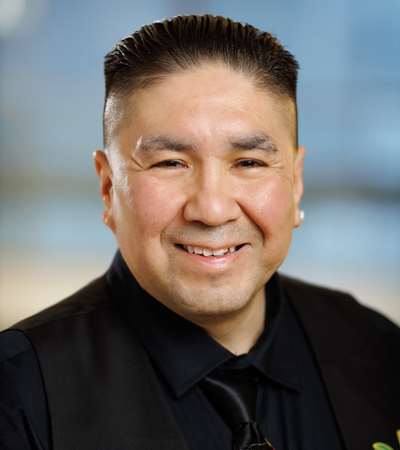
| Brian Jackson, MS, EdD He is part of the Great Lakes Native American Research Center for Health (GLNARCH) Community Scientific Advisory Committee serving the Bemidji Area. He has worked extensively with Native American students in student development programs through storytelling and cultural teachings combining academic research and Indigenous ways of being. Furthermore, Dr. Jackson is trained as a Family Circles AODA Prevention Program facilitator; providing instruction in language, traditional cultural practices, history, and culture of Native people will be preserved, thereby restoring pride in the identity of Anishnabe. With an introspective approach in which family members examine their own behaviors, the curriculum enables individuals to better understand how the process of realizing positive healthy lifestyles within the family begins with self-esteem building, coping skills building through Indian culture, values and lifestyles. |
Planning Committee Chair & Summit Host
| Jeneile Luebke, PhD, RN |
Speakers
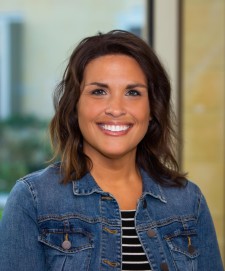
| Amy DeLong, MD, MPH Dr. Amy DeLong was appointed as the Chief Clinical Consultant for Family Medicine in the Indian Health Service in 2021. She was appointed to the Governor’s Health Equity Council in 2020. Her passions include public health efforts to prevent chronic disease like obesity, especially in childhood, promoting healthy pregnancy outcomes, adolescent health care, and being outdoors with her family. |
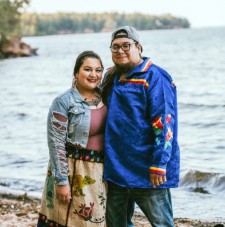
Hope Nelis-Stone, Traditional Midwife, | Hope Nelis-Stone, Traditional Midwife, IBC, CBE Russell Stone |
| Nicole Thomas, PhD, BSN, RN |
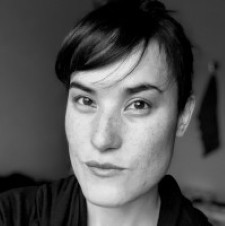
| Melissa Vera, PhD |
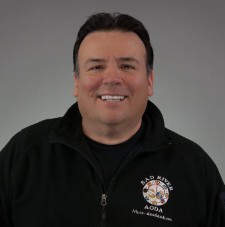
| Mike Wiggins |
Planning Committee
Jeneile Luebke, PhD*, Assistant Professor, UW-Madison School of Nursing | Amy DeLong, MD, MPH Family health and adolescent health specialist, Ho-Chunk Nation House of Wellness Clinic, Baraboo, Wisconsin | Lina Martin, Advocate for Uplifting Native Traditions and Indigenous Engagement, UW-Madison School of Medicine and Public Health, Native American Center for Health Professions | Micaela Salas, Tribal Liaison Administrative Assistant, UW-Madison School of Nursing |
| Kiana Beaudin, PA-C, MPAS, Physician Assistant, Native American Center for Health Professions | Laura Hiebing, MSW, Indigenous Student Services Coordinator, UW-Madison Academic Coaching and Tutoring Services | Melissa Metoxen, MS, Assistant Director, UW-Madison School of Medicine and Public Health, Native American Center for Health Professions | Audrey Tluczek, PhD, Retired Professor, Former STREAM Program Director, UW-Madison School of Nursing |
Autumn Chevalier, Native American Center for Health Professions | Vera Heubel, BSN, RN, Mohican Nation, Stockbridge-Munsee Health and Wellness Center | Amy Poupart, Program Director, Native American Research Center for Health, Great Lakes Inter-Tribal Council, Inc. | Kate Walsh, PhD, Licensed Clinical Psychologist |
Serena Cisneros, MS, Mental Health Provider, UW-Madison University Health Services | Tara LaRowe, PhD, RN, CD Assistant Teaching Professor, UW-Madison Nutritional Sciences | Alessandra Rella, Outreach Specialist, | Danielle Yancey, Director, UW-Madison School of Medicine and Public Health, Native American Center for Health Professions |
*Summit Chair
Policy on Disclosure
It is the policy of the University of Wisconsin–Madison Interprofessional Continuing Education Partnership (ICEP) to identify, mitigate and disclose all relevant financial relationships with ineligible companies** held by the speakers/presenters, authors, planners, and other persons who may influence content of this accredited continuing education (CE). In addition, speakers, presenters and authors must disclose any planned discussion of unlabeled/unapproved uses of drugs or devices during their presentation.
For this accredited continuing education activity all relevant financial relationships have been mitigated and detailed disclosures are listed below.
| Name | Role | Financial Relationship Disclosures | Discussion of Unlabeled/ Unapproved uses of drugs/ devices in presentation? | |
| Jeneile Luebke, PhD, RN (Bad River Band of Lake Superior Chippewa) | Director | No relevant relationships with ineligible companies to disclose | No | |
| Kiana Beaudin, PA-C, MPAS (Ho-Chunk Nation) | Planner | No relevant relationships with ineligible companies to disclose | No | |
| Nina Berge, BA, Nursing Professional Development Continuing Education Specialist | Committee Member | No relevant relationships with ineligible companies to disclose | No | |
| Autumn Chevalier | Planner | No relevant relationships with ineligible companies to disclose | No | |
| Serena Cisneros, MS (Lac Courte Oreilles) | Planner | No relevant relationships with ineligible companies to disclose | No | |
| Amy DeLong, MD (Ho-Chunk Nation) | Planner, Speaker | No relevant relationships with ineligible companies to disclose | No | |
| Sue Gaard, MS, Nursing Professional Development Director | Committee Member | No relevant relationships with ineligible companies to disclose | No | |
| Emily Haarsma, Nursing Professional Development Continuing Education Specialist | Committee Member | No relevant relationships with ineligible companies to disclose | No | |
| Vera Heubel, BSN, RN | Planner | No relevant relationships with ineligible companies to disclose | No | |
| Laura Hiebing, MSW, Indigenous Student Services Coordinator, UW-Madison Academic Coaching and Tutoring Services | Planner | No relevant relationships with ineligible companies to disclose | No | |
| Brian Jackson, MS, EdD | Speaker | No relevant relationships with ineligible companies to disclose | No | |
| Tara LaRowe, PhD, RN, CD | Planner | No relevant relationships with ineligible companies to disclose | No | |
| Lina Martin, Advocate for Uplifting Native Traditions and Indigenous Engagement, UW-Madison School of Medicine and Public Health, Native American Center for Health Professions | Planner | No relevant relationships with ineligible companies to disclose | No | |
| Melissa Metoxen, MS, Assistant Director, UW-Madison School of Medicine and Public Health, Native American Center for Health Professions | Planner | No relevant relationships with ineligible companies to disclose | No | |
| Tracy Mrochek, MPA, RN, NPD-BC, Nursing Professional Development Manager | Committee Member | No relevant relationships with ineligible companies to disclose | No | |
| Hope Nelis-Stone, Traditional Midwife, IBC, CBE (Bad River) | Speaker | No relevant relationships with ineligible companies to disclose | No | |
| Rob Poehnelt, Nursing Professional Development Continuing Education Specialist | Committee Member | No relevant relationships with ineligible companies to disclose | No | |
| Amy Poupart, Program Director, Native American Research Center for Health, Great Lakes Inter-Tribal Council, Inc. | Planner | No relevant relationships with ineligible companies to disclose | No | |
| Micaela Salas | Planner | No relevant relationships with ineligible companies to disclose | No | |
| Russell Stone (Bad River) | Speaker | No relevant relationships with ineligible companies to disclose | No | |
| Nicole Thomas, PhD, BSN, RN | Speaker | No relevant relationships with ineligible companies to disclose | No | |
| Audrey Tluczek, PhD, Retired Professor, Former STREAM Program Director, UW-Madison School of Nursing | Planner | No relevant relationships with ineligible companies to disclose | No | |
| Robin Wall-Kimmerer, MS, PhD (Citizen Potawatomi Nation) | Speaker | No relevant relationships with ineligible companies to disclose | No | |
| Melissa Vera, PhD (Tsm’syen & Yaqui First Nations) | Speaker | No relevant relationships with ineligible companies to disclose | No | |
| Kate Walsh, PhD, Licensed Clinical Psychologist | Planner | No relevant relationships with ineligible companies to disclose | No | |
| Danielle Yancey, Director, UW-Madison School of Medicine and Public Health, Native American Center for Health Professions | Planner | No relevant relationships with ineligible companies to disclose | No | |
**Ineligible companies are those whose primary business is producing, marketing, selling, re-selling, or distributing healthcare products used by or on, patients. The ACCME does not consider providers of clinical services directly to patients to be ineligible companies.
The University of Wisconsin provides equal opportunities in employment and programming, including Title IX requirements. The University of Wisconsin fully complies with the legal requirements of the ADA and the rules and regulations thereof. If any participant in this educational activity is in need of accommodations, please contact [email protected].
Accreditation Statement
 | In support of improving patient care, the University of Wisconsin–Madison ICEP is jointly accredited by the Accreditation Council for Continuing Medical Education (ACCME), the Accreditation Council for Pharmacy Education (ACPE), and the American Nurses Credentialing Center (ANCC) to provide continuing education for the healthcare team. |
Credit Designation Statements
American Medical Association (AMA)
The University of Wisconsin–Madison ICEP designates this live activity for a maximum of 4.75 AMA PRA Category 1 Credit™. Physicians should claim only the credit commensurate with the extent of their participation in the activity.
American Nurses Credentialing Center (ANCC)
The University of Wisconsin–Madison ICEP designates this live activity for a maximum of 4.75 ANCC contact hours.
ASWB Approved Continuing Education (ACE) – Social Work Credit
As a Jointly Accredited Organization, the University of Wisconsin–Madison ICEP is approved to offer social work continuing education by the Association of Social Work Boards (ASWB) Approved Continuing Education (ACE) program. Organizations, not individual courses, are approved under this program. Regulatory boards are the final authority on courses accepted for continuing education credit. Social workers completing this course receive 4.75 general continuing education credits.
American Psychological Association (APA)
 | Continuing Education (CE) credits for psychologists are provided through the co-sponsorship of the American Psychological Association (APA) Office of Continuing Education in Psychology (CEP). The APA CEP Office maintains responsibility for the content of the programs. |
American Academy of Physician Associates (AAPA)
 | The University of Wisconsin–Madison ICEP has been authorized by the American Academy of PAs (AAPA) to award AAPA Category 1 CME credit for activities planned in accordance with AAPA CME Criteria. This activity is designated for 4.75 AAPA Category 1 CME credits. PAs should only claim credit commensurate with the extent of their participation. |
Commission on Dietetic Registration Continuing Professional Education Units (CDR CPEUs)
 | Completion of the RD/DTR profession specific or IPCE activity awards CPEUs (One IPCE credit = One CPEU). If the activity is dietetics‐related but not targeted to RDs or DTRs, CPEUs may be claimed which are commensurate with participation in contact hours (One 60‐minute hour = 1 CPEU). RDs and DTRs are to select activity type 102 in their Activity Log. Performance Indicator selection is at the learner’s discretion. |
Continuing Education Units (CEUs)
The University of Wisconsin–Madison ICEP, as a member of the University Professional & Continuing Education Association (UPCEA), authorizes this program for .475 CEUs or 4.75 hours.
Available Credit
- 4.75 AAPA Category 1 CME
- 4.75 AMA PRA Category 1 Credit™
- 4.75 ANCC Contact Hours
- 4.75 APA CE Credits
- 4.75 CDR CPEUs
- 4.75 University of Wisconsin–Madison Continuing Education Hours
- 4.75 Approved for AMA PRA Category 1 Credit™
Ordering Signed Copies of Dr. Robin Wall Kimmerer's Books - Attendees may purchase signed copies of Dr. Robin Wall Kimmerer’s books through the independent bookstore, Mystery to Me. IMPORTANT: To ensure you receive a signed copy, please add "Native Nations Nursing Summit" to the comment section of your order before completing your purchase. Book orders may be picked up at the Native Nations Nursing, Helpers & Healers Summit on November 7th.
The 2025 Native Nations Nursing, Helpers, and Healers Summit will be held live in-person at the UW-Madison School of Nursing, and it will also be offered with online live-streaming to virtual attendees. No recordings will be available after the event. Here are important things to know:
- On-site events will include the First Nations Cultural Landscape Tour, morning refreshments and lunch, and an opportunity to meet Dr. Robin Wall Kimmerer.
- Certain afternoon breakout sessions may only be available to in-person attendees.
- There is limited seating for in-person attendees. Auditorium seating is available for the first 200 who register. There will be additional overflow seating in comfortable, 'state-of-the-art' Active Learning Classrooms at the School of Nursing, with live-streaming from the Auditorium.
- Generous donors may support the Summit by donating here: https://secure.supportuw.org/give/?id=e9e6d0ec-f070-489f-9988-61870ed2f57f
Registration for this activity can only be completed through the ICEP Learning Portal. Attendee registrations made through any other sites cannot be honored. UW-Madison ICEP is not able to refund fees paid through unaffiliated registration sites, such as eMedEvents.com, MedConfWorld.com, EventEgg.com, and 10times.com. Please report any unauthorized websites or solicitations for registrations to [email protected].
Accessibility
We value inclusion and access for all participants and are pleased to provide reasonable accommodation for this event. Please contact [email protected] as soon as you can make a reasonable accommodation request.
Cancellation and Refund Policy
Requests for cancellation must be submitted in writing to [email protected]. Cancellation requests received at least 96 hours prior to the conference will allow a full refund except for the nonrefundable processing fee of $10 (if applicable). No refunds will be made for cancellations received less than 96 hours prior to the activity start date.
Required Hardware/software
Free, current version of Adobe Acrobat Reader or other .pdf reader.