
 Facebook
 X
X LinkedIn
 Forward
Some trauma calls give you no warm up, no clean scene, and no second chance.
Trauma arrest, uncontrolled hemorrhage, prolonged extrication, field blood use, and hypothermia prevention all demand fast thinking, disciplined teamwork, and clear communication under pressure. These are rare calls, but when they happen, they test every part of the emergency care system.
This session brings back two veteran speakers and trusted voices in our Emergency Education Night series:
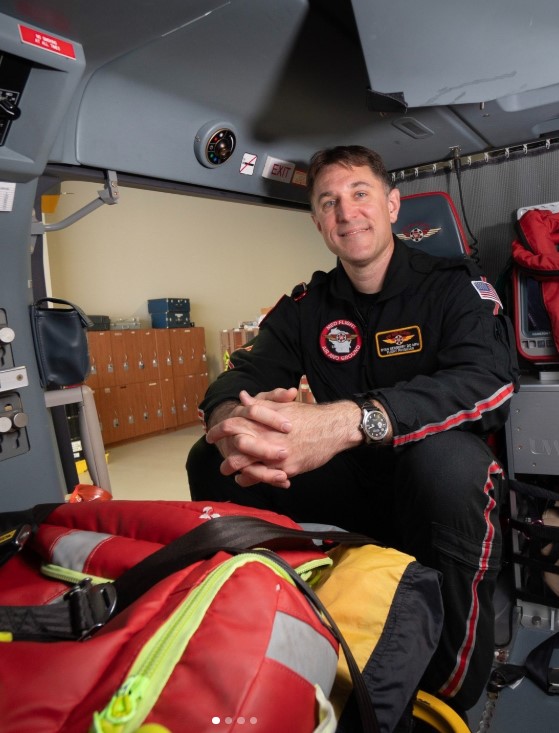
Dr. Ryan Newberry, Assistant Medical Director for UW Health Med Flight and Medical Director for the Dane County Sheriff’s Office, and

Dr. Patrick Shahan, Trauma Medical Director, UW Health. Associate Professor, Division of Acute Care and Regional General Surgery
Together, they will walk participants through advanced trauma decision making from the field to the trauma bay, with emphasis on what matters when time, blood, temperature, access, and team coordination are all working against the patient.
The discussion will focus on hemorrhage control, field blood use, trauma arrest protocols, coordinated extrication, hypothermia in trauma, and the communication needed between EMS, Med Flight, emergency departments, and trauma teams during high risk, low frequency events.
Target Audience
This activity is intended for EMS providers of all levels, including:
- Emergency Medical Responders
- EMT Basic
- Advanced EMTs
- Paramedics
- Critical Care Paramedics
- Emergency department nurses
- Advanced practice providers
- Physicians and other healthcare professionals involved in emergency and prehospital care
General Educational Objectives
Upon participation in this activity, EMS and emergency care professionals will be able to:
- Describe the evolution from the “trauma triad of death” to the “trauma diamond of death,” identify hypothermia, acidosis, coagulopathy, and hypocalcemia as interrelated contributors to mortality, and explain the critical role of calcium replacement during blood product resuscitation.
- Identify reversible causes of traumatic prehospital cardiac arrest and prioritize immediate treatment interventions.
- Identify physiologic indicators of traumatic hemorrhagic shock, including hypotension, tachycardia, altered mental status, shock index, and other indicators of inadequate perfusion, and describe their limitations during the early stages of hemorrhage.
- Apply damage control resuscitation principles in traumatic hemorrhagic shock, including early hemorrhage control, permissive hypotension when appropriate, and minimization of crystalloid and colloid administration to reduce dilutional coagulopathy, hypothermia, and worsening bleeding.
- Identify patients who may benefit from prehospital whole blood or component therapy and determine when suspected hemorrhagic shock should prompt mobilization of additional blood resources or rendezvous with an EMS system capable of providing prehospital blood products.
- Describe the respective roles of ground EMS, helicopter EMS, the emergency department, and trauma services in traumatic resuscitation.
- Apply triage, transport, and destination selection principles for patients with traumatic arrest.
- Demonstrate effective multidisciplinary communication and structured handoffs from the scene through definitive hospital care.
Continuing Education and Accreditation
This activity provides 1.0 Continuing Education Hour through the University of Wisconsin Interprofessional Continuing Education Partnership.
EMS Providers: This activity is accredited by the Commission on Accreditation for Prehospital Continuing Education (CAPCE). Granting of CAPCE credit does not represent endorsement by CAPCE or its board members.
EMS participants must attend the live session in its entirety and complete the required attendance verification and evaluation within 30 days to receive continuing education credit.
Cost
There is no cost to attend this activity.
To register for the live session through Microsoft Teams, Click here: "When Seconds Freeze": Trauma Arrest and Hemorrhage Control in Motion
- 1.00 AAPA Category 1 CME
- 1.00 AMA PRA Category 1 Credit™
- 1.00 ANCC Contact Hours
- 1.00 CAPCE CEH
- 1.00 University of Wisconsin–Madison Continuing Education Hours
- 1.00 Approved for AMA PRA Category 1 Credit™