
 Facebook
 X
X LinkedIn
 Forward
New to Public Health Residency Program 2026-2028: Session 9 - Access to and Linkage to Clinical Care
OVERVIEW
The New to Public Health Residency Program is an innovative development program designed to build confidence and competency for professionals who are new to public health.
The program is built upon the Foundational Public Health Services Model and develops enhanced knowledge and skills within the foundational areas and capabilities that are essential to public health practice.
The residency program includes an evidence-based practice project, peer networking, mentoring, facilitated reflection and journaling, simulation, and case studies to support the new resident as they transition to practice; while inspiring collaborative, interdisciplinary relationships to promote and protect health at a population level.
STATEMENT OF NEED AND PURPOSE
The residency program is designed to provide new public health professionals the foundational capabilities that are essential to public health practice. Overarching residency curriculum focuses on leadership, professional development, role-specific formation and competency. A residency program bridges the workforce by integrating the knowledge of experienced public health professionals and the fresh ideas of new staff to positively affect population health.
Integration of public health professionals from across jurisdictions allows the new public health professional to understand how diversity in the workforce strengthens essential services across city and county lines, and allows for enhanced networking and future collaboration.
Residency programs supplement state and local orientation programs and build upon department-specific policy, procedures, and tasks, to allow the resident to see a fuller picture of the field of public health.
This contemporary program utilizes a comprehensive practice model that supplements existing knowledge of staff and supports the synthesis of new ideas. The program promotes standardized tools for the participant to customize based on their individual practice.
INTENDED AUDIENCE
This residency program is designed to meet the needs of nurses, social workers, sanitarians, health educators, and other public health professionals that are new to their roles.
ELEMENTS OF COMPETENCE
This continuing education (CE) activity is designed to improve learner competence and focuses on the following areas:
- The American Board of Medical Specialties: Interpersonal communication skills, Professionalism and Systems-based practice
- National Academy of Medicine/Nursing: Employing evidence-based practice, Applying quality improvement, and Population Health
- Interprofessional Education Collaborative Competencies: Values/ethics, Roles/responsibilities, and Interprofessional communication
- Social Impact And Belonging: Engage in Self-reflection, Address Differences in Health Outcomes, and Value Culturally Centered Care.
GLOBAL LEARNING OBJECTIVES
By the end of the residency program, the new public health professional as a member of the interprofessional healthcare team will:
- Apply learned concepts from the Foundational Public Health Services’ model to their public health professional practice.
- Increase knowledge, skills, and confidence for competent public health practice.
- Access tools and resources applicable to public health practice.
- Apply health equity and social justice concepts to public health practice.
- Demonstrate enhanced cultural competency knowledge and skills in their individual practice.
- Research, plan, and present a quality improvement or evidence-based practice project within their local health department or community.
SESSION LEARNING OBJECTIVES
By the end of this session, the new public health professional as a member of the interprofessional healthcare team will:
- Detail how public health provides timely, statewide, and locally relevant and accurate information to the health care system and community on access and linkage to clinical care (including behavioral health), healthcare system access, quality, and cost.
- Locate what organizations inspect and license healthcare facilities, and license, monitors, and discipline healthcare providers, where applicable.
- Identify healthcare partners and competencies and describe how to develop prioritized plans for increasing access to health homes and quality health care in addition to seek funding for high priority policy initiatives, in concert with national and statewide groups and local providers of health care.
- Explain how public health convenes across governmental agencies, such as departments of transportation, aging, substance use/mental health, education, planning and development, or others, to protect community members of the health department’s jurisdiction.
SUCCESSFUL COMPLETION
Residents will view lectures, panel discussions, participate in cased-based and small-group discussions, participation in simulation and skill-based training, and participate in simulation, skill-based training, and gaming activities over a 12 month period of time.
The residency program also includes an evidence-based practice project, peer networking, mentoring, facilitated reflection, journaling to support the new resident as they transition to practice while inspiring collaborative, interdisciplinary relationships to promote and protect health at a population level.
Course summary
- 7.50 ADA CERP Continuing Education Credits
- 7.50 ANCC Contact Hours
- 7.50 CECH Approved Credits
- 7.50 University of Wisconsin–Madison Continuing Education Hours
Session Sections
| Session 9: Pre-Test |
| Health Care Coverage and Access to Care Overview |
| Scavenger Hunt |
| Rural Health |
| Substance Use Disorders & Mental Health |
| Oral Health |
| Transportation |
| Aging |
| American Indian/Alaska Native Health |
| Discussion |
| Reflection |
| Discussion Post Check In |
| Session 9: Post-Test |
| Session 9: Evaluation |
| References |
CURRENT CONTENT AUTHORS AND REVIEWERS
 | Julianna ManskeNew to Public Health Residency Program ManagerJulianna Manske is the program manager and co-founder of the New to Public Health Residency Program and is employed with the University-Wisconsin Madison School of Nursing. Julianna spearheaded the workgroup in 2016 that developed and implemented the Southeastern Wisconsin Public Health Nurse Residency Program. This program, which ran from 2017-2020, served as a foundation to build the New to Public Health Residency Program, which supports public health professionals in their first year of employment at a local, regional, tribal, or state health department. Julianna serves on the Association of Public Health Nurses’ Board of Directors (Education and Professional Development Committee Chair 2018-2022, Secretary 2022-2023; President rotation 2023-2026). Julianna graduated from Concordia University with a Master of Science in Nursing Education, and Carroll University with a Bachelor of Science in Nursing. Julianna is passionate about workforce development, and she is grateful to work with an incredible team developing and facilitating the New to Public Health Residency Program; and collaborating with public health leaders across the country. |
 | McKenzie LiegelNew to Public Health Residency Program SpecialistMcKenzie Liegel is the Program Specialist with the New to Public Health Residency Program. She received her Masters in Public Health with a focus in Community Health from East Tennessee State University and her BS in Biology from UW Madison. Prior to joining the N2PH team, McKenzie was with the UW Population Health Institute where she worked as a coach for communities across Wisconsin to help them implement policy, systems, and environmental changes and improve health equity. She also focused on public health workforce development and training. McKenzie has previous experience in local governmental public health, working as a Population Health Service Fellow at two LHDs in rural Wisconsin. In her time as a Fellow, she focused on the CHA/CHIP process, COVID-19 response and communications, accreditation, coalition building, and implementing health equity training for staff. She has also served as an AmeriCorps VISTA member in Appalachian Tennessee, worked on COVID-19 response with WI Department of Health Services, and provided technical assistance around substance misuse for the Opioid Response Network. |
 | Judith AmorsenJudith Amorsen is the Program Director of Mobility Management & Faith in Action, Waukesha County at Eras Senior Network, a nonprofit dedicated to supporting older adults and adults with disabilities in remaining independent and connected to their communities. With deep experience in aging services, Judith leads programs that address transportation challenges, social isolation, and healthy aging through intergenerational initiatives, volunteer coordination, and mobility solutions. She has overseen the launch of a countywide online calendar to connect older residents with social, educational, and wellness events, and she works collaboratively with local partners to expand access to resources that promote dignity and independence in aging. Judith’s work reflects a strong commitment to equity, accessibility, and enhancing quality of life for vulnerable populations. |
 | Christopher FoxChris Fox is a certified Mobility Manager with Milwaukee County Transit System (MCTS.) He earned a bachelor’s degree from the University of Wisconsin-Milwaukee in Urban Geography with a certificate in Urban Planning and a focus in Transportation. Chris leads a team that uses creative solutions to remove barriers to transportation by providing Travel Training and Community Outreach activities for seniors and people with disabilities throughout Milwaukee County. In addition, the team has created an ADA Sensitivity Training program for bus operators that has received national recognition and has served as a model for operator ADA training in several cities. |
 | Claire OpsteenClaire Opsteen received her Associate’s Degree in Dental Hygiene from Northeast Wisconsin Technical College in 2015. She is currently employed with the City of Menasha Health Department as a Public Health Registered Dental Hygienist. Prior to receiving her Dental Hygiene degree, she worked as an orthodontic assistant for 26 years. Claire is dedicated to making a positive impact in the community through provision of dental hygiene services within the Menasha school district, oral health education in classrooms and at community events and assisting with referrals for treatment. |
| Tracy SchroepferDr. Schroepfer, PhD, MSW, MA, is a professor at the University of Wisconsin-Madison School of Social Work. She is a recipient of the Hartford Geriatric Social Work Faculty Scholar Award, and serves on several national aging-focused boards including the Association for Gerontology Education in Social Work and the NQF Geriatric and Palliative Care Standing Committee. Dr. Schroepfer’s research focuses on improving the care provided to elders who are seriously or terminally ill by determining the best strategies for meeting their psychosocial, cultural and spiritual needs. Her research is informed by her former practice as a hospice social worker. |

ORIGINAL CONTENT AUTHORS (2021-2025)
 | Sarah HarveySarah Harvey was a Mobility Manager at Eras Senior Network in Waukesha, Wisconsin. In this supportive role, she assists the elderly and adults with disabilities with their unique transportation needs. Sarah works to continuously improve the transportation infrastructure within her county through efforts of coordination and partnership building. Sarah serves as Secretary on the Board of Directors for the Wisconsin Association of Mobility Managers and holds a BA in Communications from the University of Wisconsin - Milwaukee. |
 | Hannah HayesHannah Hayes was a co-developer of the New to Public Health Residency Program. In 2018, Hannah completed her Master of Public Health (MPH) at the University of Wisconsin-Madison. During that time, Hannah partnered with the Southeastern Wisconsin Public Health Nurse Residency Program, where she assisted in the co-development of a toolkit for the dissemination and implementation of the residency program, which served as the foundation for the New to Public Health Residency Program. Hannah Hayes currently works as a nurse at Access Community Health Center. Hannah graduated with her Bachelor of Science in Nursing in 2016. |
| Barbara KingDr. King’s research is dedicated to creating sustainable and scalable practice change to promote patient safety for hospitalized older adults. Her efforts include identifying systemic barriers that prevent nurses from delivering the best care to older patients and developing realistic solutions that enable healthcare systems to remove or overcome those barriers. Her experience as a geriatric nurse practitioner has provided her with a unique and valuable perspective as a researcher, teacher and mentor. Her work to optimize nursing care of hospitalized older adults was recognized with a 2017 John A. Hartford Foundation Award. |
 | Misty McNellisMisty McNellis was a Health Program Associate for the State of Alaska Department of Health and Social Services where she assists with the creation of staff development trainings. She has a B.S. in Biological Sciences and M.Ed. in Secondary Education. |
| Annette ReardenAnnette Rearden lives in the mountain community of Bear Valley just outside Anchorage, Alaska quietly situated amongst the ravens and bears. She is a daughter, sister, aunt, wife, mother, dog owner, gardener, reader, and outdoor adventurer. Annette hails from Michigan originally, having graduated from Marquette University with a BSN in nursing followed by a Masters in Nursing Education from University of Alaska, Anchorage. Alaska has been home for over 20 years where she is fortunate to teach nursing at Alaska Pacific University. |
| Karla WeiseKarla Weise is of the Yupik and Tsimshian tribes, and an enrolled member of the Metlakatla Indian Community. She earned a Master’s of Public Health degree in Public Health Practice and a Bachelor of Science degree in Nursing Science both from the University of Alaska, and also a Bachelor of Science degree in Exercise and Sport Science from Oregon State University. She has worked in various capacities within the Alaska Tribal Health System for over twenty years, and currently serves as an Improvement Facilitator for the Alaska Native Tribal Health Consortium in Anchorage, Alaska. She is dedicated to public health service for all people and currently serves as a Commissioned Corps officer, and prioritizes advocating for health equity for Alaska Native and American Indian people through committee involvement such as the State of Alaska Maternal and Child Death Review Committee and Alaska Public Health Association Board of Directors. |
| Megan ZuelsdorffDr. Zuelsdorff, PhD, is an epidemiologist studying social-biological pathways and mechanisms that underlie cognitive health disparities in later life. She leads the Stress and Resilience in Dementia (STRIDE) study, focused on clarifying stress-related physiological mechanisms that link life course adversity to brain aging and cognitive declines in older populations. Her work prioritizes research and action that improves inclusion of underrepresented communities in cognitive aging studies through accessible design, ongoing responsiveness to community stakeholders, and sustained service. Dr. Zuelsdorff’s interdisciplinary research program is centered on understanding community-specific dementia risk factors, as well as personal, community, and policy-based resources that can reduce risk burden. |
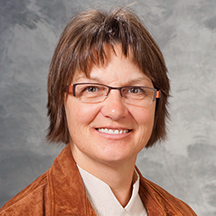

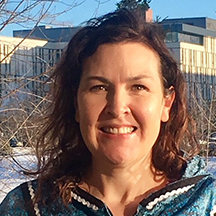

PLANNING COMMITTEE MEMBERS
Jill Denson, PhD, ABD, MSW, APSW | Deborah Heim, PhD, MS, MN, BSN | Ajay Sethi, PhD, MHS |
Katie Gillespie, DNP, RN, CPH, FAAN | McKenzie Liegel, MPH, CHES |
|
Cathy Goodpaster, RDH BS | Julianna Manske, MSN, RN, OCN |
|
POLICY ON DISCLOSURE
It is the policy of the University of Wisconsin–Madison Interprofessional Continuing Education Partnership (ICEP) to identify, mitigate and disclose all relevant financial relationships with ineligible companies* held by the speakers/presenters, authors, planners, and other persons who may influence content of this accredited continuing education (CE). In addition, speakers, presenters and authors must disclose any planned discussion of unlabeled/unapproved uses of drugs or devices during their presentation.
For this accredited continuing education activity all relevant financial relationships have been mitigated and detailed disclosures are listed below.
*Ineligible companies are those whose primary business is producing, marketing, selling, re-selling, or distributing healthcare products used by or on, patients.
The ACCME does not consider providers of clinical services directly to patients to be ineligible companies.
< INSERT TABLE FROM PARENT >
Accreditation Statement
 | In support of improving patient care, the University of Wisconsin–Madison ICEP is jointly accredited by the Accreditation Council for Continuing Medical Education (ACCME), the Accreditation Council for Pharmacy Education (ACPE), and the American Nurses Credentialing Center (ANCC) to provide continuing education for the healthcare team. |
Credit Designation Statements
American Nurses Credentialing Center (ANCC)
The University of Wisconsin–Madison ICEP designates this Enduring Material for a maximum of 7.50 ANCC contact hours.
ASWB Approved Continuing Education (ACE) – Social Work Credit
As a Jointly Accredited Organization, the University of Wisconsin–Madison ICEP is approved to offer social work continuing education by the Association of Social Work Boards (ASWB) Approved Continuing Education (ACE) program. Organizations, not individual courses, are approved under this program. State and provincial regulatory boards have the final authority to determine whether an individual course may be accepted for continuing education credit. University of Wisconsin–Madison ICEP maintains responsibility for this course. Social workers completing this course receive 7.50 general continuing education credits.
American Dental Association’s Continuing Education Recognition Program (ADA CERP)
 | The University of Wisconsin–Madison Interprofessional Continuing Education Partnership (ICEP) is an ADA CERP Recognized Provider. ADA CERP is a service of the American Dental Association to assist dental professionals in identifying quality providers of continuing dental education. ADA CERP does not approve or endorse individual courses or instructors, nor does it imply acceptance of credit hours by boards of dentistry. Concerns or complaints about a CE provider may be directed to the provider or to the Commission for Continuing Education Provider Recognition at ADA.org/CERP. The University of Wisconsin–Madison Interprofessional Continuing Education Partnership (ICEP) designates this activity for 7.50 continuing education credits. Concerns or complaints about a CE provider may be directed to the provider, or to the Commission for Continuing Education Provider Recognition at ADA.org/CERP. |
Continuing Education Units (CEUs)
The University of Wisconsin–Madison ICEP, as a member of the University Professional & Continuing Education Association (UPCEA), authorizes this program for .750 CEUs or 7.50 hours.
Certified Health Education Specialists (CHES)
Sponsored by University of Wisconsin–Madison ICEP, a designated provider of continuing education contact hours (CECH) in health education by the National Commission for Health Education Credentialing, Inc. This program is designated for Certified Health Education Specialists (CHES) and/or Master Certified Health Education Specialists (MCHES) to receive up to 7.50 total Category I continuing education contact hours. Continuing Competency credits available are 7.50.
Available Credit
- 7.50 ADA CERP Continuing Education Credits
- 7.50 ANCC Contact Hours
- 7.50 CECH Approved Credits
- 7.50 University of Wisconsin–Madison Continuing Education Hours
Registration Information
The New to Public Health Residency Program limits registration to applicants accepted into the program. To learn more or apply to the program, please visit https://new2publichealth.wisc.edu/apply/ or email [email protected].
Registration for this activity can only be completed through the ICEP Learning Portal. Attendee registrations made through any other sites cannot be honored. UW-Madison ICEP is not able to refund fees paid through unaffiliated registration sites, such as eMedEvents.com, MedConfWorld.com, EventEgg.com, and 10times.com. Please report any unauthorized websites or solicitations for registrations to [email protected].
Accessibility
If you need anything to participate in this program, please contact [email protected].
Required Hardware/software
Free, current version of Chrome, Firefox, Safari, or Microsoft Edge with audio and video capabilities. Some older browsers and Internet Explorer could produce error messages or not display the content correctly.
~~~~~
Please note that the CDC is currently modifying its website in response to emerging federal executive orders. As a result, some links may become temporarily unavailable or broken. If you encounter any broken links, we encourage you to contact program facilitators at [email protected] so we can address the issue and provide you with an alternative resource. Thank you for your understanding and assistance!